
Quad exercises
Squat
The barbell back squat is the king of leg exercises: with the bar on your upper back, you bend at the hips and knees and stand back up. It primarily works the quads and glutes, with the hamstrings, adductors and core supporting. It builds strength and muscle across your whole lower body and carries over well to running, jumping and lifting things off the floor.
- Primary muscle
- quads
- Also works
- hamstrings and glutes
- Equipment
- Barbell
Log your squat sets
Weight, reps and PRs on your phone and Apple Watch, with this same video inside the app. Free.



How to do squat, step by step
Set the bar in the rack at chest height and position it on your upper traps, not your neck.
Unrack it, take two or three steps back and set your feet a bit wider than hip width with your toes slightly out.
Take a big breath and brace your abs as if you were about to take a punch.
Descend by bending your hips and knees together, with your knees tracking over your toes.
Go down until your hip crease is at or below knee level, without losing your back position.
Drive up by pushing through your whole foot, letting your chest and hips rise together.
Exhale at the top and take a fresh breath before the next rep.
Muscles worked
Calculate your squat 1RM
Enter the weight and reps of a hard set and get your estimated one-rep max and the weights to train with.
lb
1–12
- Strength
- 145 lb
- 4–6 reps
- Hypertrophy
- 130 lb
- 8–12 reps
- Endurance
- 110 lb
- 12–15 reps
Form tips
- Keep your weight over your whole foot (heel, big toe and pinky toe), not just your heels.
- Knees traveling past your toes is normal; what matters is that they follow the line of your feet.
- Set the rack's safety pins just below the depth you squat to.
- If depth is hard to reach, elevate your heels slightly with plates or weightlifting shoes.
Common mistakes
- Knees caving in on the way up: think about spreading the floor apart with your feet and lower the weight if needed.
- Hips shooting up first so you fold forward: drive your chest and hips up at the same time.
- Cutting depth out of fear: reduce the load and work to a depth you can control.
- Exhaling at the bottom: hold your brace until you're past the hardest part of the ascent.
Frequently asked questions
- What muscles do squats work?
- Mostly the quads and glutes, with the adductors and hamstrings involved. Your back and abs work hard to keep your torso rigid under the bar.
- How deep should you squat?
- Aim to get your hip crease at least level with your knees. If you can keep a neutral back, going deeper is fine and tends to train the glutes more.
- Squat or leg press?
- The squat demands more stability and technique and trains more muscles at once; the leg press lets you load your legs with less back fatigue. They work well together in the same program.
Squat alternatives
Other exercises for the same muscle, in case you lack the equipment or want some variety.
| Exercises | Primary muscle | Equipment |
|---|---|---|
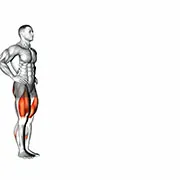 Lunge | quads | No equipment |
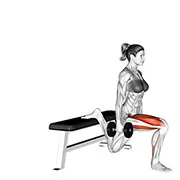 Bulgarian split squat | quads | Dumbbells |
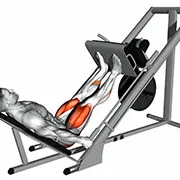 Leg press | quads | Machine or cable |
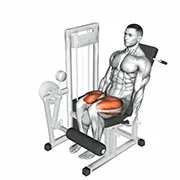 Leg extension | quads | Machine or cable |
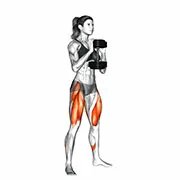 Goblet squat | quads | Dumbbells |
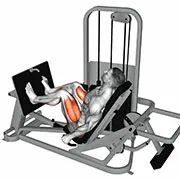 Leg Press Horizontal (Machine) | quads | Machine or cable |
Your next squat PR, logged
My PR saves every set, tells you when you hit a PR and works out your 1RM for you. Gym routines, running and hybrid training in one app.
- Video and form for 400+ exercises
- PRs and estimated 1RM for every exercise, no maths
- Routines and plans that adapt to your progress